
Description
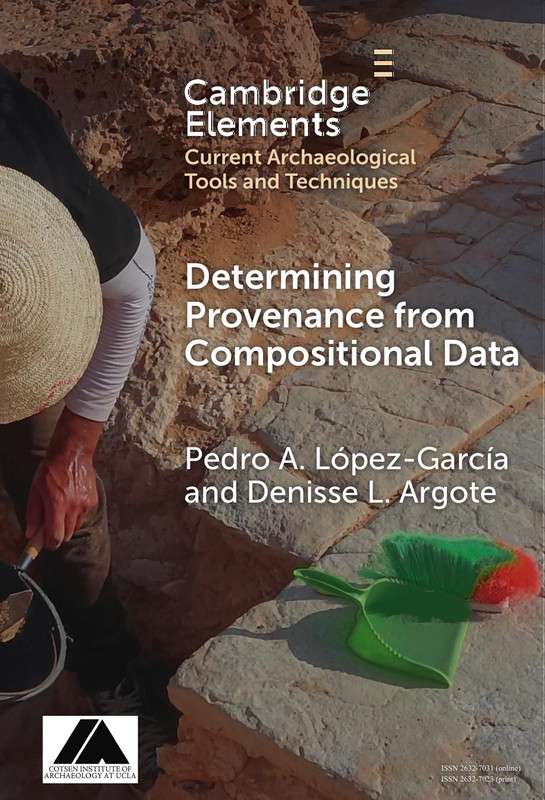
Determining Provenance From Compositional Data Complete Guide
Compositional Data Provenance Analysis helps researchers, geologists, archaeologists, environmental scientists, and data analysts identify the origin and history of materials using advanced statistical and scientific methods. This detailed course provides a practical understanding of provenance determination techniques while teaching learners how to analyze compositional datasets accurately and efficiently. Moreover, the course combines theoretical foundations with hands-on analytical workflows, allowing students to solve real-world provenance challenges across multiple scientific disciplines.
Why Learn Provenance Analysis?
Modern scientific research increasingly depends on compositional data to identify material sources, geological histories, and manufacturing origins. Therefore, professionals need reliable analytical methods to interpret complex datasets correctly. This course explains how provenance studies support archaeology, geology, environmental science, forensic investigations, mining, and industrial quality control.
Additionally, learners will explore how statistical models, geochemical analysis, and machine learning techniques improve source identification and classification accuracy. As a result, students gain valuable research and analytical skills that apply directly to scientific and industrial projects.
What You Will Learn
- Understand the foundations of compositional data analysis
- Learn provenance determination methodologies
- Analyze geochemical and mineralogical datasets
- Apply multivariate statistical techniques
- Perform clustering and classification analysis
- Interpret elemental and isotopic compositions
- Use visualization techniques for scientific datasets
- Identify source materials using compositional signatures
- Work with real-world provenance case studies
- Develop reproducible scientific workflows
Course Features
This course focuses on practical scientific applications and analytical problem-solving. Furthermore, each module introduces step-by-step workflows that simplify complex compositional analysis concepts. Learners will work with real datasets and develop confidence using statistical tools for provenance interpretation.
In addition, the training explains how to avoid common errors in compositional data analysis. Students will also learn proper normalization techniques, data transformations, and statistical validation methods to improve analytical reliability.
Topics Covered
- Introduction to Provenance Studies
- Compositional Data Fundamentals
- Geochemical Data Interpretation
- Statistical Modeling Techniques
- Principal Component Analysis (PCA)
- Cluster Analysis and Classification
- Isotopic Fingerprinting
- Machine Learning for Provenance Studies
- Data Visualization and Reporting
- Case Studies in Archaeology and Geology
Practical Applications
Provenance analysis plays a major role in many scientific and industrial fields. Consequently, this course demonstrates how compositional data supports practical decision-making and research investigations.
- Archaeological artifact sourcing
- Geological material classification
- Environmental contamination tracking
- Mining exploration and mineral analysis
- Food authenticity verification
- Forensic material investigations
- Cultural heritage preservation
- Industrial quality assurance
Tools and Technologies
Throughout the course, learners will use modern analytical and scientific computing tools. Moreover, students will gain practical experience working with statistical software and data visualization platforms commonly used in research laboratories and scientific institutions.
- Python for Scientific Computing
- R Programming for Statistics
- NumPy and Pandas
- Data Visualization Libraries
- Geochemical Analysis Software
- Statistical Modeling Frameworks
- Machine Learning Tools
- Scientific Reporting Platforms
Who Should Take This Course?
- Geologists and earth scientists
- Archaeologists and heritage researchers
- Environmental scientists
- Data analysts working with scientific datasets
- Mining and exploration professionals
- Students studying geochemistry or materials science
- Researchers conducting provenance investigations
Career Benefits
Compositional data analysis skills continue to grow in importance across scientific and industrial sectors. Therefore, professionals who understand provenance determination methods can access advanced research and analytical opportunities worldwide.
Furthermore, this course strengthens critical thinking, statistical analysis, and scientific interpretation skills. These capabilities help learners contribute effectively to research projects, laboratory investigations, and industrial analytical workflows.
Explore These Valuable Resources
Explore Related Courses
- Data Science Courses
- Machine Learning Training
- Python Programming Courses
- Artificial Intelligence Certifications
- Statistics and Analytics Programs
Conclusion
Determining provenance from compositional data requires strong analytical skills, scientific understanding, and practical experience with modern statistical methods. As industries and research organizations increasingly rely on data-driven investigations, provenance analysis expertise continues to become more valuable. This course provides comprehensive training that enables learners to interpret complex datasets confidently and apply advanced provenance determination techniques effectively across scientific and industrial applications.



Reviews
There are no reviews yet.