
Description
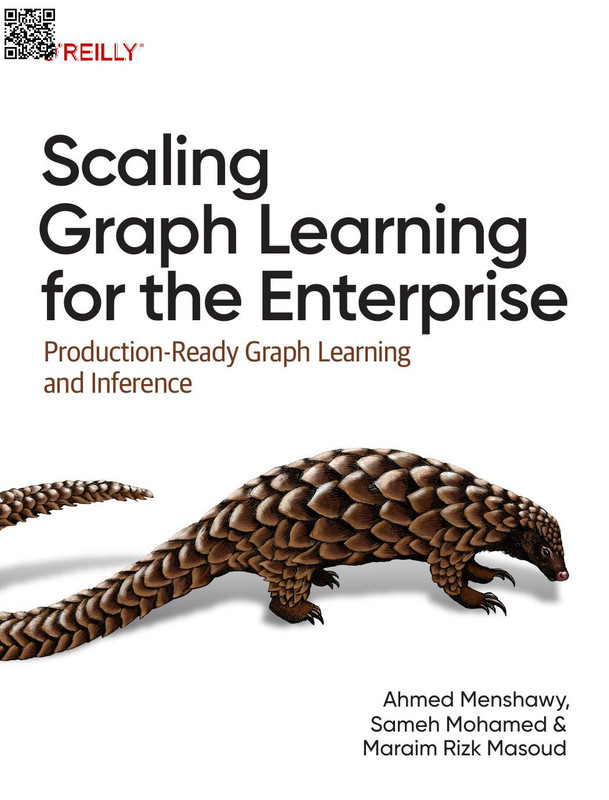
Scaling Graph Learning for the Enterprise
Scaling Graph Learning for the Enterprise gives data leaders, ML engineers, and architects a practical blueprint to design, train, and operationalize graph neural networks (GNNs) and graph analytics at production scale across complex, regulated environments. You’ll master patterns for ingesting heterogeneous graphs, feature engineering at scale, distributed training, and low-latency inference—while meeting governance, reliability, and cost constraints.
Course overview
Enterprise graphs unify customers, transactions, devices, content, and risk signals. This course bridges graph data management with modern ML: building robust pipelines from graph databases and data lakes, creating node/edge features, and selecting architectures such as GraphSAGE, GAT, and message-passing networks. You’ll implement scalable training on GPUs/CPUs, evaluate business-fit metrics, and deploy services that integrate with existing data platforms, APIs, and monitoring stacks.
What you will learn
- Graph foundations: schema design, node/edge typing, properties, and handling large, evolving graphs.
- Feature engineering: neighborhoods, meta-paths, motifs, random walks, and aggregations for node/edge tasks.
- GNN architectures: GraphSAGE, GAT, message passing, and techniques for inductive learning over dynamic graphs.
- Scalability patterns: sampling (GraphSAINT), mini-batching, partitioning, caching, and distributed training.
- MLOps for graphs: experiment tracking, model registries, CI/CD, canary releases, drift detection, and lineage.
- Performance and reliability: latency-aware inference, serving graphs at scale, and cost optimization.
- Governance and security: PII controls, role-based access, audit trails, and explainability for high-stakes decisions.
Curriculum highlights
- Module 1: Enterprise graph data modeling and ingestion from lakes/streams and operational systems.
- Module 2: Feature stores for graphs; reproducible pipelines and offline/online feature parity.
- Module 3: Training GNNs with PyTorch Geometric/DGL; sampling, batching, and hardware utilization.
- Module 4: Deploying inference—microservices, vector indices, and real-time scoring over subgraphs.
- Module 5: Observability—telemetry, SLOs, model/graph drift, and rollback strategies.
- Capstone: End-to-end fraud or recommendation graph solution with governance and cost control.
Who should enroll
- ML engineers: building scalable GNN training and inference services.
- Data scientists: crafting graph features and business-aligned metrics.
- Data/solution architects: integrating graph systems with enterprise platforms and MLOps.
- Risk, fraud, and product teams: leveraging graph signals for decisions and personalization.
Course benefits
By the end, you’ll deliver production-grade graph learning: resilient pipelines, calibrated models, and measurable business impact. You will translate graph insights into faster fraud interdiction, richer recommendations, smarter supply-chain decisions, and network risk scores—backed by observability, governance, and cost discipline.
Explore These Valuable Resources
- PyTorch Geometric Documentation
- Deep Graph Library (DGL) Official Site
- Neo4j Graph Database Documentation
Explore Related Courses
- Graph Databases and Data Modeling
- Machine Learning Systems
- PyTorch Essentials
- Data Engineering Essentials
- MLOps Foundations
Prerequisites
- Python and ML basics: NumPy, pandas, train/validation, and evaluation metrics.
- Graph familiarity: nodes/edges, adjacency, traversal patterns, and basic query languages.
- Systems knowledge: containers, APIs, and fundamentals of cloud or on-prem orchestration.
Conclusion
Scale graph learning with confidence. This course equips you with the engineering patterns, governance guardrails, and operational playbooks to run GNNs and graph analytics where it matters most—production.




Reviews
There are no reviews yet.