Description
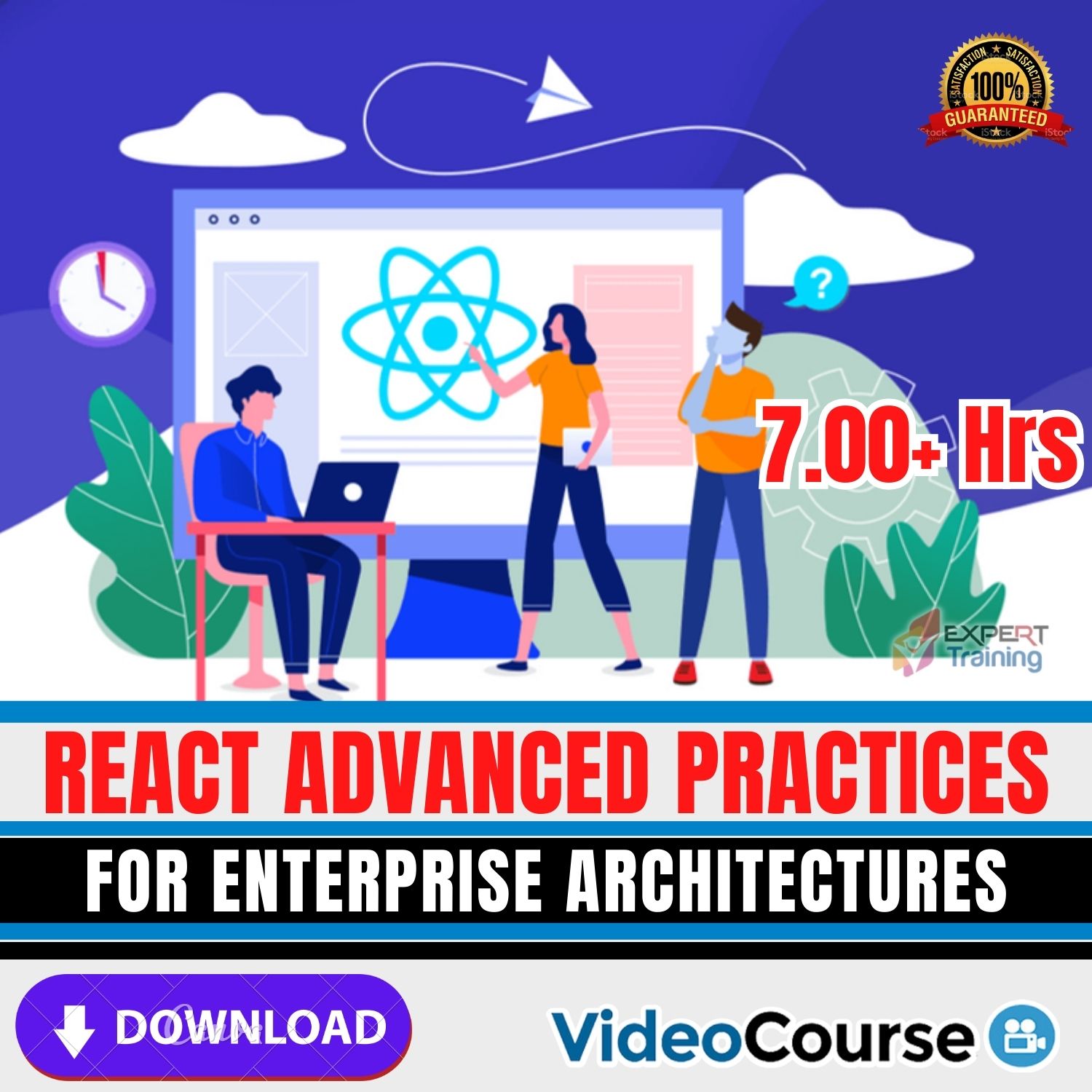
React Advanced Practices For Enterprise Architectures
Advanced React Enterprise Architecture Techniques — a comprehensive course designed to equip developers and architects with cutting‑edge strategies for building scalable, maintainable, and high‑performance enterprise‑grade React applications.
Why This Course Matters
In modern web development, building complex applications that can grow over time requires more than just knowledge of React components. You need to think about architecture, state management, performance, and maintainability. This course addresses those needs by diving deep into architectural patterns, best practices, and pragmatic tools that organizations use to ship scalable React applications reliably.
What You Will Learn
- How to structure large React codebases for scalability and team collaboration.
- Advanced component design patterns (Higher‑Order Components, Render Props, Custom Hooks, Context API) for reusability and flexibility.
- State management strategies for enterprise applications (e.g., combining Context, Redux/MobX/other stores, and local component state).
- Code‑splitting, lazy loading, and performance optimization techniques for faster load times and smooth user experience.
- Testing strategies: unit testing, integration testing, and end‑to‑end testing best practices specific to React enterprise applications.
- Handling side‑effects and asynchronous flows in large apps (e.g., data fetching, caching, error handling, optimistic updates).
- Architecting React apps for maintainability: modular folder structure, naming conventions, documentation, and team workflow integration.
- Preparing for deployment and scaling: bundling strategies, server‑side rendering (SSR) or static site generation (SSG), continuous integration/continuous deployment (CI/CD) pipelines.
Course Modules & Topics
- Module 1: Project Structure & Folder Conventions — organizing your codebase for clarity and growth
- Module 2: Advanced Component Patterns — HOCs, Render Props, Hooks, and Context API usage
- Module 3: State Management — Redux, context‑based stores, local vs global state, performance trade‑offs
- Module 4: Performance & Optimization — code splitting, memoization, lazy loading, profiling
- Module 5: Testing Strategies — Jest, React Testing Library, integration, and e2e tests
- Module 6: Asynchronous Data & Side Effects — data fetching, caching, error handling, optimistic UI patterns
- Module 7: Build, Deployment & CI/CD — bundling, SSR/SSG setup, deployment best practices
- Module 8: Scaling Teams & Code — guidelines for collaboration, code reviews, documentation, modularization
- Module 9: Case Studies & Real‑world Examples — walk‑throughs of enterprise‑scale React apps
Who Should Enroll
This course is ideal for:
- Frontend developers looking to deepen their React skills beyond basic tutorials.
- Software architects designing large‑scale web applications.
- Team leads or project managers who want to ensure maintainable and scalable codebases.
- Developers transitioning from small or startup‑scale projects to enterprise‑level applications.
Prerequisites
Before starting this course, you should have a solid understanding of JavaScript (ES6+), fundamental React concepts (components, props, state), and familiarity with basic web development workflows. Experience with a version control system (e.g., Git) will also be beneficial.
Ready to Build Real‑World React Apps
By the end of this course, you will have the knowledge and architectural mindset to build robust, high‑quality React applications that can scale with your team and user base — just like major production apps used by leading companies worldwide.
Explore These Valuable Resources.
Official React Documentation
Redux — State Management Guide
Martin Fowler on React Architecture Patterns