
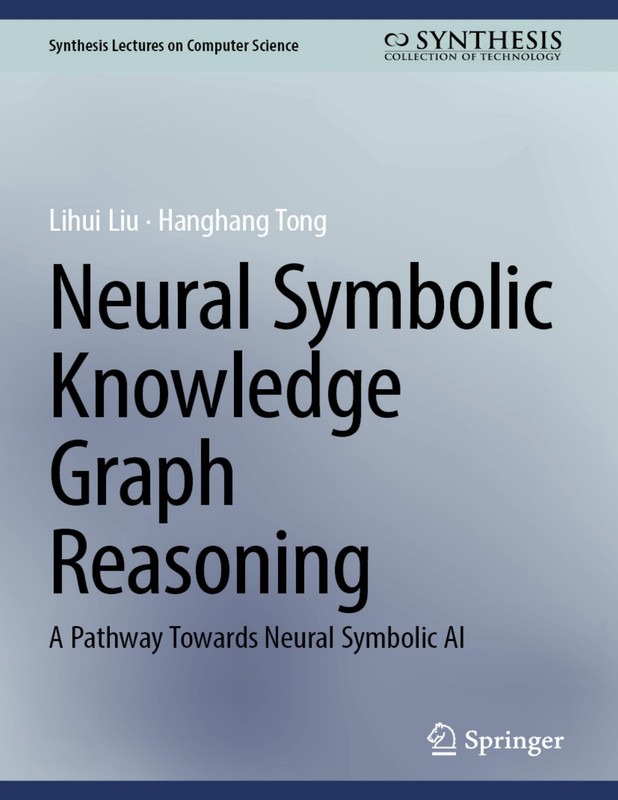
Description
Neural Symbolic Knowledge Graph Reasoning Course
Neural Symbolic Knowledge Graph Reasoning is an advanced learning pathway that explains how artificial intelligence systems combine neural networks with symbolic reasoning to build powerful, interpretable, and knowledge-driven AI models. This course introduces the foundations of neural-symbolic AI, demonstrates how knowledge graphs support intelligent reasoning, and shows how modern AI systems integrate structured knowledge with deep learning for real-world applications.
Artificial intelligence continues to evolve rapidly; however, traditional deep learning models often struggle with logical reasoning and interpretability. Therefore, researchers increasingly explore neural-symbolic approaches that merge neural networks with symbolic knowledge structures. In this course, you will first understand the fundamentals of knowledge graphs and logical reasoning. Then, you will explore how neural architectures interact with symbolic representations to perform complex reasoning tasks.
Moreover, the course explains how knowledge graphs represent relationships between entities, which enables machines to understand context and semantic meaning more effectively. As a result, neural-symbolic systems can reason over structured data, answer complex queries, and support explainable AI systems.
What You Will Learn
- Fundamentals of Neural-Symbolic Artificial Intelligence
- Knowledge Graph structures and semantic representations
- Logical reasoning techniques in AI systems
- Integration of neural networks with symbolic reasoning
- Graph-based machine learning models
- Explainable AI and interpretable machine learning
- Applications of neural-symbolic reasoning in industry
Why Neural-Symbolic AI Matters
Deep learning models excel at pattern recognition; however, they often lack logical reasoning capabilities. Consequently, neural-symbolic AI addresses this limitation by integrating symbolic knowledge with neural learning. In addition, this hybrid approach allows machines to perform reasoning tasks similar to human cognitive processes.
For example, knowledge graphs help represent relationships between data points in domains such as healthcare, finance, cybersecurity, and recommendation systems. Therefore, organizations increasingly rely on graph reasoning systems to extract insights from large datasets. Furthermore, neural-symbolic reasoning improves model transparency, which is critical for trustworthy AI systems.
Practical Applications
This course demonstrates real-world applications of neural-symbolic reasoning systems. For instance, you will explore how AI models use knowledge graphs for intelligent search engines, semantic question answering, recommendation systems, and decision-support tools. Additionally, the course explains how companies integrate symbolic reasoning into machine learning pipelines to improve prediction accuracy.
By the end of the training, learners will confidently design knowledge graph models, apply reasoning algorithms, and integrate symbolic logic with neural networks. Consequently, students gain valuable skills that support advanced AI research and modern intelligent system development.


Reviews
There are no reviews yet.