
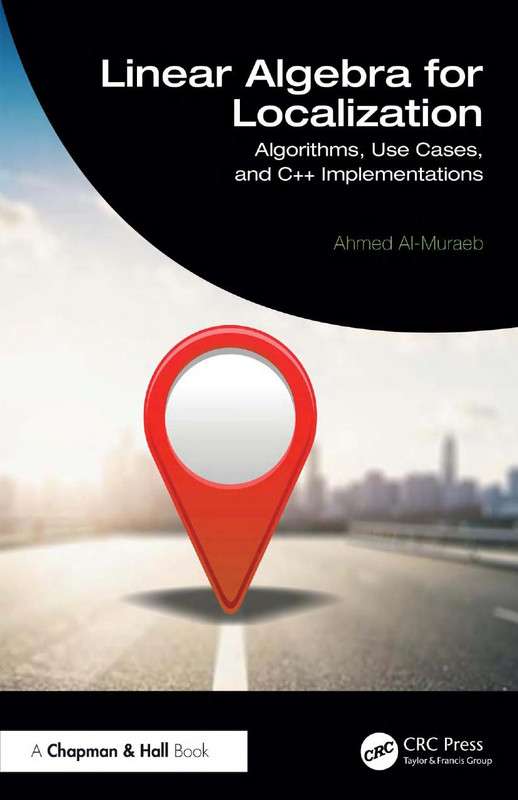
Description
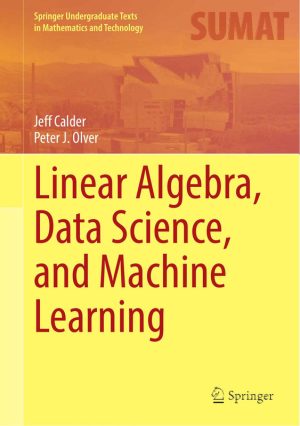
Linear Algebra Localization Algorithms Practical Guide
Linear Algebra Localization Algorithms form the mathematical backbone of modern positioning systems, robotics navigation, computer vision, and autonomous technologies. This practical course provides a comprehensive understanding of how linear algebra powers localization algorithms used in real-world engineering and artificial intelligence applications. Moreover, the course combines mathematical theory with hands-on implementation so learners can confidently apply localization techniques in robotics, wireless communication, and navigation systems.
Why Learn Linear Algebra for Localization?
Localization algorithms rely heavily on vectors, matrices, coordinate transformations, and optimization methods. Therefore, understanding linear algebra helps engineers and developers create accurate positioning systems for autonomous vehicles, drones, mobile robots, and GPS-enabled applications.
Additionally, this course explains complex mathematical concepts in a simplified and practical way. Instead of focusing only on equations, learners will work on real localization problems and computational implementations. Consequently, students can strengthen both their mathematical understanding and practical development skills.
What You Will Learn
- Understand vectors, matrices, and linear transformations
- Learn coordinate systems and spatial representations
- Apply matrix operations in localization algorithms
- Build positioning models for robotics and navigation
- Understand least squares estimation techniques
- Work with Kalman filters and sensor fusion
- Perform geometric transformations and rotations
- Learn localization techniques used in autonomous systems
- Implement practical localization algorithms using programming tools
- Analyze real-world navigation and tracking systems
Core Mathematical Concepts
This course introduces essential linear algebra concepts required for localization systems. Furthermore, learners will explore how mathematical operations directly impact positioning accuracy and navigation efficiency.
- Vector spaces and vector operations
- Matrix multiplication and inversion
- Eigenvalues and eigenvectors
- Coordinate transformation matrices
- Orthogonal projections
- Singular Value Decomposition (SVD)
- Optimization techniques
- Distance and geometric calculations
Practical Localization Applications
Localization algorithms play a critical role in modern intelligent systems. Therefore, this course demonstrates practical applications used across multiple industries and research domains.
- Autonomous vehicle navigation
- Indoor positioning systems
- GPS and satellite navigation
- Drone localization and tracking
- Robot path planning
- Computer vision and augmented reality
- Wireless sensor network positioning
- Smart manufacturing automation
Hands-On Learning Experience
Throughout the course, learners will solve practical localization problems using mathematical and programming approaches. In addition, the training includes real-world datasets, simulations, and implementation examples that improve analytical thinking and technical confidence.
Students will also explore localization challenges such as sensor noise, environmental interference, and positioning uncertainty. As a result, learners can better understand how engineers optimize real-world navigation systems.
Tools and Technologies Covered
- Python Programming
- NumPy for matrix computations
- SciPy scientific computing tools
- MATLAB concepts and workflows
- Robotics simulation environments
- Data visualization libraries
- Sensor fusion frameworks
- Navigation system modeling tools
Who Should Take This Course?
- Robotics engineers and developers
- AI and machine learning enthusiasts
- Students studying engineering or computer science
- Researchers working on navigation systems
- Developers building autonomous applications
- Professionals interested in computational mathematics
Career Advantages
Localization and navigation technologies continue to expand rapidly in robotics, automotive engineering, aerospace, and artificial intelligence industries. Consequently, professionals with strong mathematical and localization skills remain highly valuable.
Furthermore, this course helps learners build problem-solving abilities, computational thinking skills, and practical engineering expertise that companies actively seek in modern technology roles.
Explore These Valuable Resources
- NumPy Matrix Computation Library
- SciPy Scientific Computing Tools
- MATLAB Mathematical Computing Platform
Explore Related Courses
- Robotics Training Courses
- Artificial Intelligence Programs
- Machine Learning Courses
- Python Programming Training
- Computer Vision Certifications
Conclusion
Linear algebra serves as the foundation for advanced localization and navigation systems used in modern intelligent technologies. Therefore, mastering these mathematical concepts opens opportunities in robotics, autonomous systems, artificial intelligence, and engineering research. This practical guide delivers both theoretical understanding and real-world implementation skills so learners can confidently develop and optimize localization algorithms for future technologies.






Reviews
There are no reviews yet.