
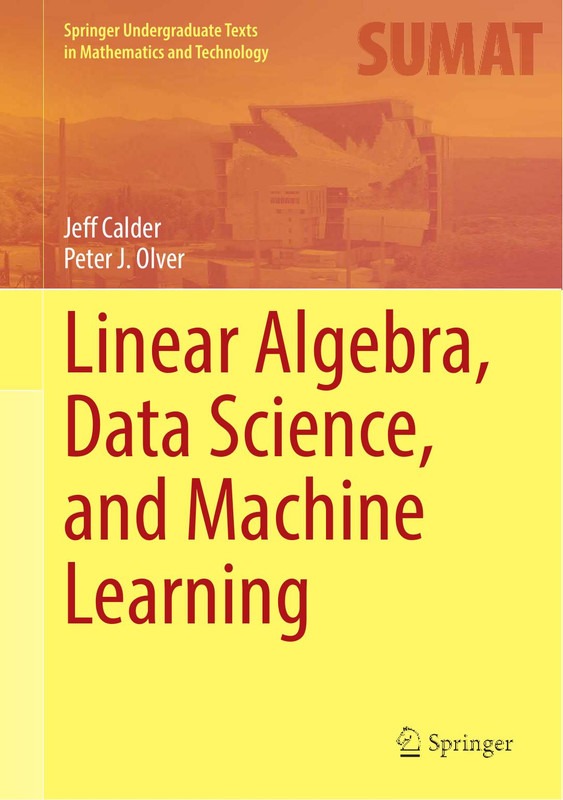
Description
This comprehensive course is designed to bridge the gap between mathematical theory and real-world applications in data science and machine learning. By combining linear algebra concepts with practical data analysis techniques, learners will gain the confidence to interpret algorithms, work with high-dimensional data, and implement machine learning models more effectively.
Course Overview
This course provides a structured and practical approach to mastering linear algebra and applying it directly to data science and machine learning workflows. You will begin with core mathematical concepts such as vectors, matrices, and linear transformations, then progress toward real-world applications including dimensionality reduction, optimization, and predictive modeling.
Rather than focusing on abstract theory alone, the course emphasizes intuition, visualization, and implementation. Learners will see how linear algebra powers popular machine learning techniques such as regression, classification, clustering, and neural networks.
What You Will Learn
- Core linear algebra concepts including vectors, matrices, eigenvalues, and eigenvectors
- Matrix operations and their role in data transformations
- How linear algebra supports data preprocessing and feature engineering
- Applications of linear algebra in machine learning algorithms
- Foundations of optimization techniques used in model training
- Connections between linear algebra, statistics, and data science workflows
Applications in Data Science & Machine Learning
Linear algebra is the mathematical backbone of data science and machine learning. In this course, you will explore how matrices represent datasets, how vector spaces enable efficient computation, and how linear transformations help reduce complexity in large-scale data problems.
You will also understand how concepts such as singular value decomposition (SVD) and principal component analysis (PCA) are used for dimensionality reduction, noise removal, and data visualization—skills that are essential for modern data scientists and machine learning engineers.
Who This Course Is For
- Aspiring data scientists and machine learning practitioners
- Students seeking a practical understanding of linear algebra
- Software engineers transitioning into AI and data-driven roles
- Professionals who want to strengthen their mathematical foundation
Explore These Valuable Resources.
Explore Related Courses
Why Enroll in This Course?
By completing this course, you will develop a deep understanding of how linear algebra drives data science and machine learning solutions. This knowledge will empower you to move beyond using tools blindly and instead build, analyze, and optimize models with confidence. Whether you are preparing for advanced studies or aiming to advance your professional career, this course delivers the essential mathematical skills required in today’s data-driven world.






Reviews
There are no reviews yet.