
Description
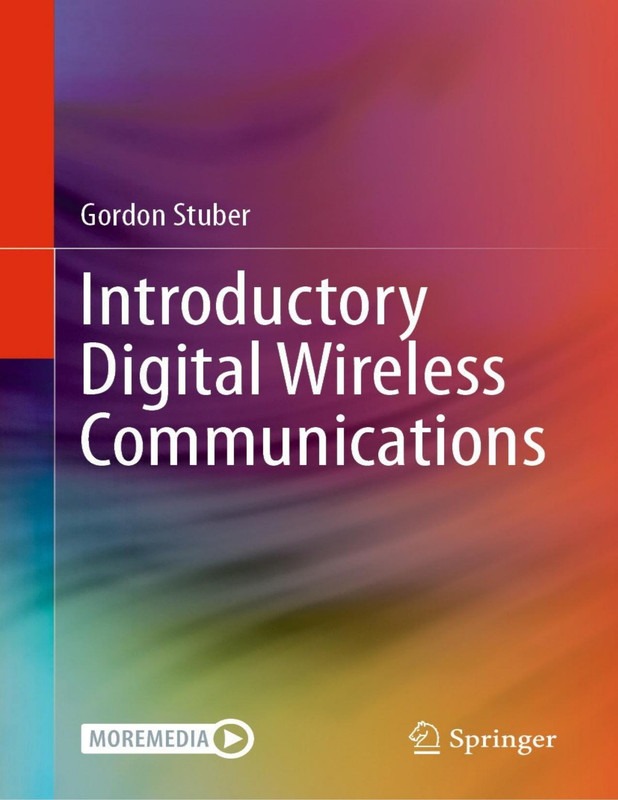
Introductory Digital Wireless Communications Concepts and Principles – Digital Wireless Communications Fundamentals Course
Digital wireless communications fundamentals form the backbone of modern connectivity, and this comprehensive course introduces the essential concepts and principles required to understand how wireless systems transmit information reliably and efficiently. Designed as a strong meta-ready introduction, this course equips learners with the theoretical foundation and practical insight needed to navigate today’s wireless technologies.
Course Overview
Wireless communication powers everything from smartphones and Wi-Fi networks to satellite systems and IoT devices. In this course, Introductory Digital Wireless Communications Concepts and Principles, you will explore how digital information is transmitted over wireless channels, the challenges involved, and the engineering techniques used to overcome them.
The curriculum bridges theory and real-world application, covering signal representation, modulation techniques, channel characteristics, noise, interference, and system performance metrics. Whether you aim to pursue a career in telecommunications, electronics, networking, or research, this course provides a solid conceptual framework.
What You’ll Learn
- Fundamentals of digital communication systems
- Signal representation in time and frequency domains
- Basic modulation techniques (ASK, FSK, PSK, QAM)
- Bandwidth, data rate, and spectral efficiency concepts
- Noise, interference, and signal-to-noise ratio (SNR)
- Wireless channel models and fading principles
- Error detection and correction basics
- Overview of modern wireless standards
Description: Digital Wireless Communications Fundamentals
This course introduces learners to the building blocks of wireless systems, including transmitters, receivers, antennas, and propagation environments. You will understand how digital signals are encoded, modulated, transmitted through a wireless medium, and decoded at the receiver. Practical examples connect theory to technologies such as Wi-Fi, cellular networks, and satellite communication.
In addition, you will explore how engineers measure system performance, optimize reliability, and manage trade-offs between power, bandwidth, and complexity. The course ensures clarity in mathematical concepts while keeping explanations accessible for beginners.
Requirements
- Basic knowledge of mathematics (algebra and elementary calculus)
- Introductory understanding of physics concepts like waves and frequency
- No prior wireless communication experience required
Who This Course Is For
- Engineering students (ECE, EEE, Telecommunications, Computer Engineering)
- Networking professionals seeking foundational wireless knowledge
- Technology enthusiasts interested in how wireless systems work
- Aspiring researchers in digital communication systems
Explore These Valuable Resources
- International Telecommunication Union (ITU)
- IEEE Standards Association
- 3GPP – Mobile Communication Standards
Explore Related Courses
- Explore Related Courses
- Explore Related Courses
- Explore Related Courses
- Explore Related Courses
- Explore Related Courses
By completing this course, you will gain a structured understanding of digital wireless communications fundamentals, enabling you to analyze, design, and evaluate modern wireless systems with confidence.













![Python for Signal and Image Processing Master Class [2023] - 8.2 GB](https://expertrainingdownload.com/wp-content/uploads/2024/05/JSEL1186C2A0PythonC2A0forC2A0SignalC2A0andC2A0ImageC2A0Processin-300x300.jpg)
Reviews
There are no reviews yet.