
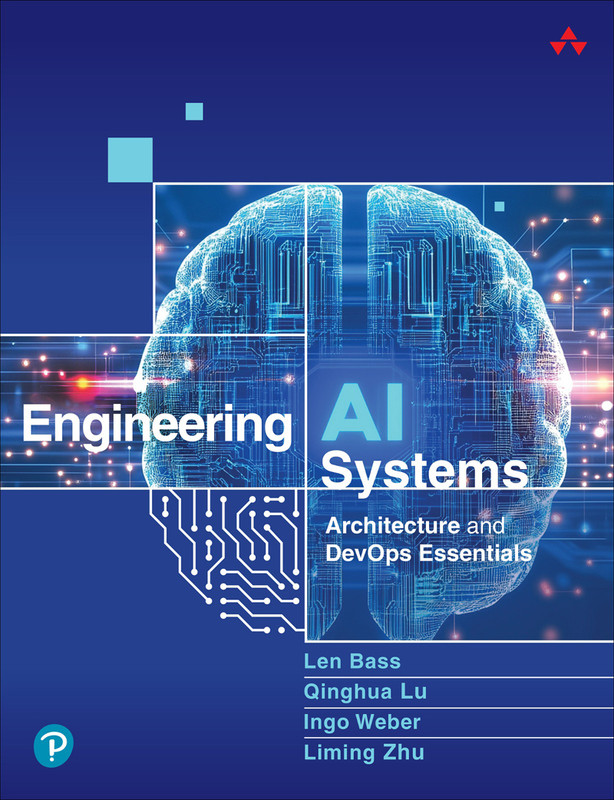
Description
Engineering AI Systems: Architecture and DevOps Essentials
Introduction
AI Systems Architecture and DevOps Essentials is a practical, end-to-end course that teaches engineers how to design, build, deploy, and operate production-grade AI systems using modern architecture patterns and DevOps/MLOps practices.
This course blends system architecture, scalable data pipelines, model lifecycle management, continuous integration/continuous delivery (CI/CD) for ML, and observability so you can go from prototype to production with confidence.
Course Overview
Over the span of this course you will learn architectural principles for AI systems, how to implement robust data and feature pipelines, containerization and orchestration strategies (Docker, Kubernetes), CI/CD for models, automated testing for ML, monitoring and SLOs for model performance, and security & governance best practices. The course emphasizes hands-on labs and real-world case studies so you can apply concepts immediately.
Who This Course Is For
- Software engineers and architects building or migrating AI/ML services to production.
- Data engineers and MLOps engineers responsible for pipelines, deployment, and monitoring.
- DevOps professionals who want to support AI workloads and learn model lifecycle workflows.
- Technical leads and managers who need to plan, evaluate, and govern AI systems.
What You’ll Learn
- Design patterns for scalable, resilient AI system architecture.
- Building data ingestion and feature stores for reproducible ML pipelines.
- Containerizing models and services; deploying with orchestration platforms.
- Implementing CI/CD/MLOps pipelines for automated training, validation, and deployment.
- Monitoring, alerting, and observability for data drift, model drift, latency, and accuracy.
- Security, privacy, and governance considerations for production AI.
- Cost-aware architecture and cloud operational practices.
Course Modules (Detailed)
- Foundations of AI System ArchitecturePrinciples, layered architecture, microservices vs. monoliths for ML, API design for model serving.
- Data Engineering & Feature StoresStreaming vs. batch ingestion, transformations, feature engineering, consistency and lineage.
- Model Packaging & ContainerizationModel serialization, serving frameworks, Docker best practices, reproducible builds.
- Orchestration & ScalabilityKubernetes fundamentals, autoscaling, resource management, GPU scheduling.
- CI/CD & MLOps PipelinesAutomated training, validation gates, canary and blue/green deployments for models.
- Monitoring, Observability & GovernanceMetrics, logs, tracing, SLOs, data/model drift detection, auditability and compliance.
- Security & Cost OptimizationSecure model artifacts, data encryption, role-based access, and cost controls.
- Capstone: End-to-End ProductionizationImplement a full pipeline from data collection to serving, with monitoring and CI/CD.
Hands-on Projects & Labs
Each module includes practical labs: building a feature pipeline, packaging a model into a container, creating a Kubernetes deployment, and building a CI/CD/MLOps pipeline with automated tests. The final capstone walks you through deploying a complete AI service and configuring observability and rollback strategies.
Prerequisites
- Basic programming skills (Python recommended).
- Familiarity with ML concepts (training, evaluation, basic models).
- Understanding of Linux, Git, and basic networking concepts.
Format & Duration
Self-paced video lessons + downloadable notebooks and scripts. Includes guided labs and sample infrastructure templates. Typical completion time: 6–8 weeks at 5–7 hours/week (flexible).
Outcomes & Career Impact
Graduates will be equipped to lead production AI initiatives, contribute to MLOps pipelines, design reliable AI architectures, and reduce time-to-production for ML systems — skills highly valuable for roles like MLOps Engineer, AI Platform Engineer, and ML Architect.
Assessment & Certification
The course includes quizzes, lab assessments, and a graded capstone. Successful completion awards a certificate suitable for CVs and professional profiles.
Instructor & Support
Taught by experienced AI engineers and platform architects with real-world production deployments. Learner support includes community forums, lab walkthroughs, and periodic live Q&A sessions.
FAQs
- Do I need cloud credits?
- Some labs can be run locally with CPU-only configurations; cloud examples use common providers but cost-management advice is included.
- Is prior ML research required?
- No — practical ML experience is helpful, but the course focuses on engineering and operations rather than advanced ML theory.




Reviews
There are no reviews yet.