
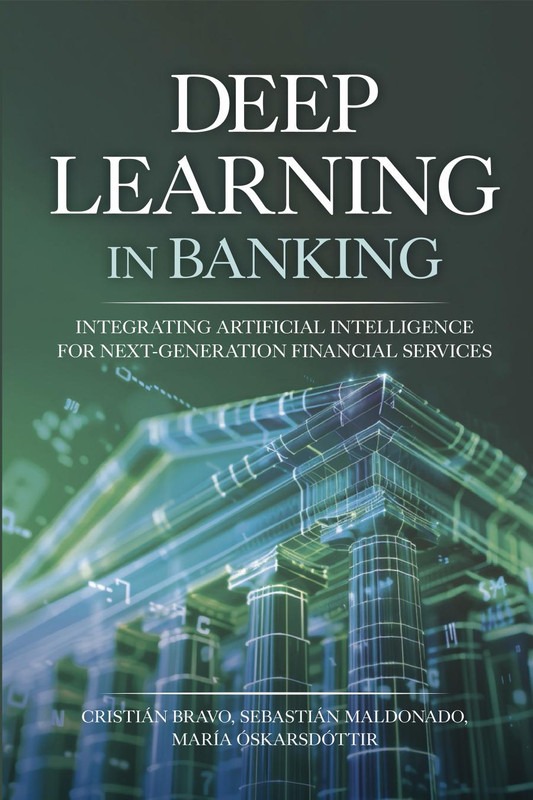
Description
Deep Learning in Banking Course
Deep Learning Banking Applications Course introduces powerful artificial intelligence techniques used by modern financial institutions to improve decision-making, detect fraud, and automate financial services. In today’s rapidly evolving financial ecosystem, banks increasingly rely on deep learning models to analyze massive datasets, predict customer behavior, manage risk, and optimize investment strategies. Therefore, this course helps learners understand how neural networks, machine learning algorithms, and advanced data analytics transform the banking industry. Moreover, you will explore real-world banking use cases, practical model development, and deployment strategies used by global financial organizations.
What You’ll Learn
- Understand the fundamentals of deep learning and neural networks used in banking.
- Analyze financial datasets using AI-driven predictive models.
- Build fraud detection systems using deep learning techniques.
- Develop customer behavior prediction models for banking services.
- Apply AI algorithms to credit scoring and loan risk assessment.
- Use deep learning for algorithmic trading and financial forecasting.
- Implement AI-based chatbots and automated banking assistants.
- Explore real-world banking case studies powered by AI technologies.
Requirements
- Basic understanding of programming concepts.
- Familiarity with Python or similar programming language is helpful.
- Basic knowledge of machine learning concepts.
- Interest in artificial intelligence and financial technologies.
- A computer capable of running data science tools.
Description : Deep Learning Banking Applications Course
Deep learning has rapidly become a critical technology in modern banking systems. First, banks use deep learning models to analyze customer transactions and detect suspicious patterns. As a result, financial institutions significantly reduce fraud and financial crime.
Furthermore, deep learning improves credit scoring models. Instead of relying solely on traditional scoring systems, banks now analyze thousands of behavioral variables. Consequently, financial institutions can make more accurate lending decisions.
Additionally, banks use AI-driven models to personalize financial services. For instance, recommendation engines suggest investment products, savings plans, and credit options tailored to individual customers. Therefore, banks improve customer satisfaction while increasing revenue.
Another major application involves algorithmic trading and financial forecasting. Deep learning models analyze market trends, historical data, and economic indicators. As a result, traders and analysts gain deeper insights into market behavior.
Moreover, this course explores the practical side of AI in banking. You will learn how financial institutions design deep neural networks, train predictive models, and deploy AI systems securely. In addition, the course explains regulatory considerations, data privacy challenges, and ethical AI practices in financial services.
By the end of this course, you will clearly understand how deep learning technologies reshape the banking sector. Consequently, you will gain valuable knowledge that can help you pursue careers in financial technology, AI engineering, banking analytics, or data science.
Who This Course Is For
- Students interested in artificial intelligence and finance.
- Data scientists who want to work in financial technology.
- Banking professionals exploring AI-driven solutions.
- Software developers interested in fintech innovation.
- Researchers studying deep learning applications in financial systems.
Explore These Valuable Resources
- IBM Guide to Deep Learning
- TensorFlow Deep Learning Tutorials
- Artificial Intelligence in Finance Explained








Reviews
There are no reviews yet.