
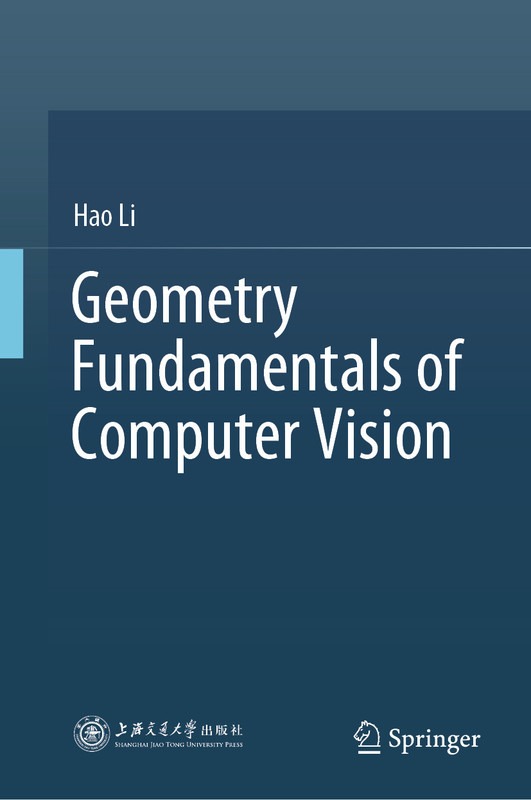
Description
Geometry Foundations for Modern Computer Vision Applications
Introduction: Geometry Foundations for Computer Vision form the backbone of understanding how machines interpret visual data. This course provides a comprehensive introduction to the geometric principles essential for modern computer vision, enabling learners to bridge mathematical theory with real-world applications. By the end of this training, students will gain the skills necessary to solve complex vision problems, from 3D reconstruction to motion analysis.
What You Will Learn
- Master the fundamentals of Euclidean and projective geometry as applied to computer vision.
- Understand camera models, calibration techniques, and coordinate transformations.
- Apply geometric transformations to process and analyze images efficiently.
- Explore advanced topics like epipolar geometry, stereo vision, and 3D reconstruction.
- Integrate mathematical concepts into practical algorithms for real-time vision systems.
Course Modules
- Introduction to Geometric Principles: Learn basic concepts of points, lines, planes, and transformations.
- Camera Models and Calibration: Explore pinhole and lens distortion models and calibrate cameras accurately.
- 2D and 3D Transformations: Understand translation, rotation, scaling, and projective mappings.
- Epipolar Geometry and Stereo Vision: Analyze image pairs to compute depth information.
- Applications in Modern Computer Vision: Implement algorithms in object recognition, motion tracking, and augmented reality.
Why Take This Course?
This course emphasizes practical understanding. Consequently, learners will not only comprehend theoretical concepts but also implement them in Python and popular vision libraries such as OpenCV and PyTorch. Furthermore, each module contains hands-on projects that consolidate learning and build a portfolio of applicable skills. By mastering these foundations, students can accelerate their career in AI, robotics, and autonomous systems.
Explore These Valuable Resources
Explore Related Courses
- Deep Learning Essentials
- Machine Learning for Vision
- AI and Robotics Fundamentals
- Computer Vision Projects
- Python Programming for Vision
Who Should Enroll
Students, engineers, and researchers interested in AI, robotics, and computer vision will benefit most from this course. Moreover, professionals aiming to implement cutting-edge computer vision solutions in industry projects will find this training invaluable. Therefore, whether you are a beginner or have prior programming experience, this course provides a structured path to mastering geometric foundations efficiently.
Conclusion
Ultimately, Geometry Foundations for Computer Vision equips learners with the knowledge and skills necessary to excel in modern computer vision applications. With hands-on exercises, detailed theoretical explanations, and real-world projects, students can confidently tackle challenges in AI, robotics, and visual computing.



Reviews
There are no reviews yet.